Structure, actuation, enclosure development and full-system assembly.
Robotics
Systems
Overview
Two robotic platforms that connect mechanical development, sensor integration and perception in real-world environments.
The work moves across two scales: shaping and integrating a wheeled humanoid platform, then building a mobile perception system that can inspect inventory through RGB, depth and RFID sensing.
ScopeMechanical designSystem integrationSensor integrationRobotic perception
One practice / Two systems
FROM PHYSICAL ARCHITECTURE
TO ENVIRONMENTAL UNDERSTANDING.
Mobility, multi-modal sensing and software that interprets a changing warehouse.
MAKE THE ROBOT READ AS ONE SYSTEM.
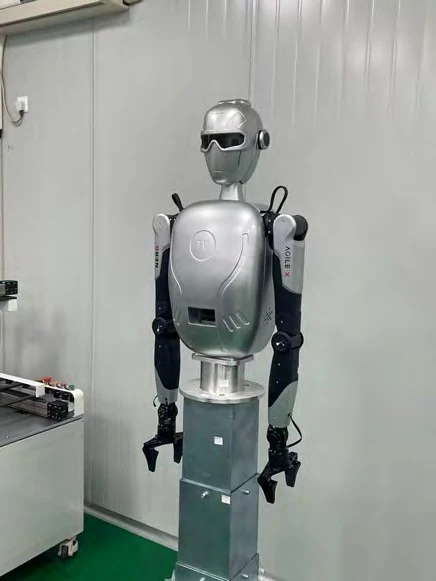
The platform combines a wheeled mobile base, dual-arm manipulation, vision hardware and a modular robotic architecture. My contribution focused on translating those technical requirements into a buildable, testable product form.
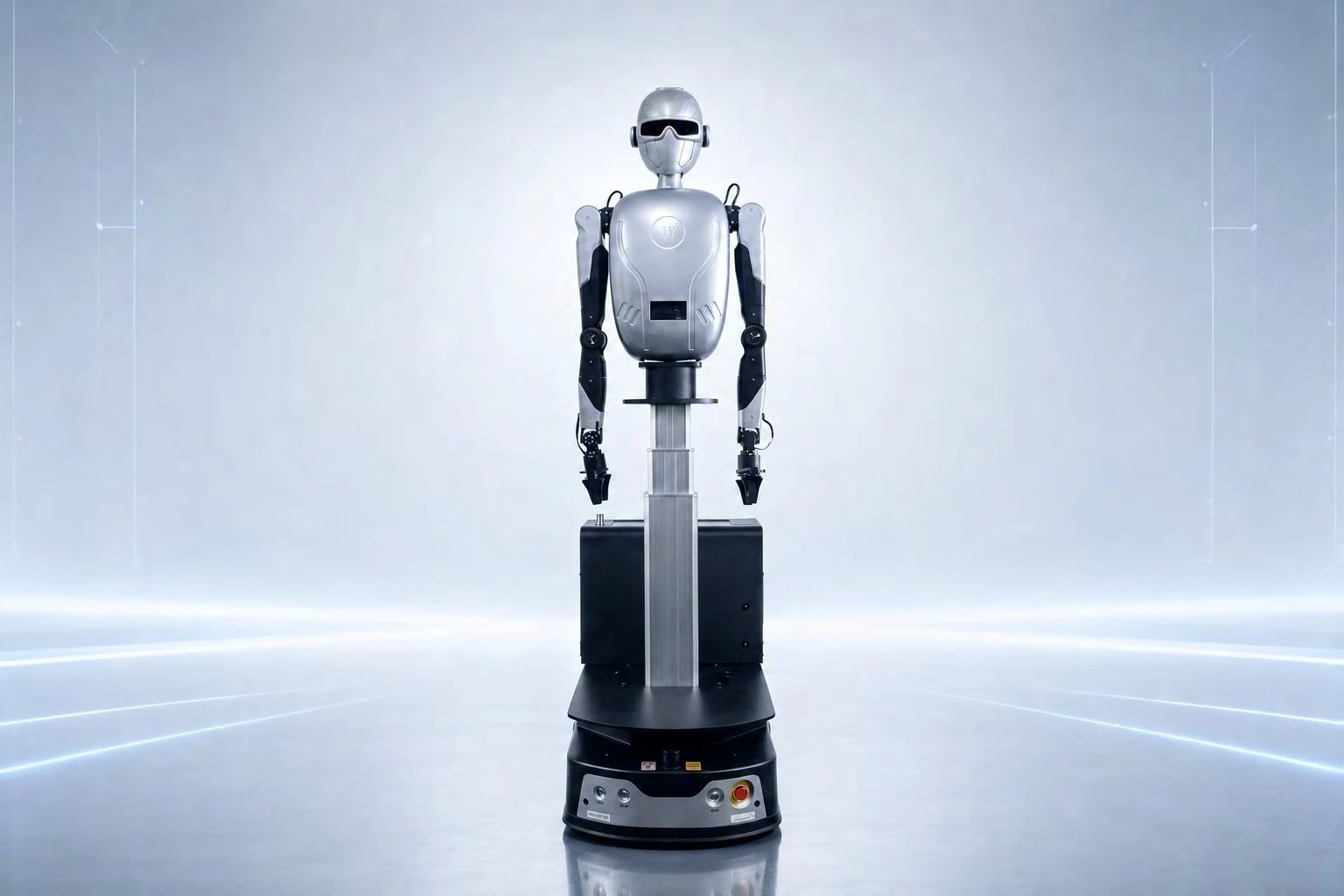
- 01Robot styling and structural layout
- 02Prototype assembly and evaluation
- 03Design validation support
- 04Algorithm and programming support
STRUCTURE FIRST.
INTEGRATION NEXT.
FORM LAST.
GIVE A MOBILE ROBOT
A USEFUL VIEW OF THE SHELF.
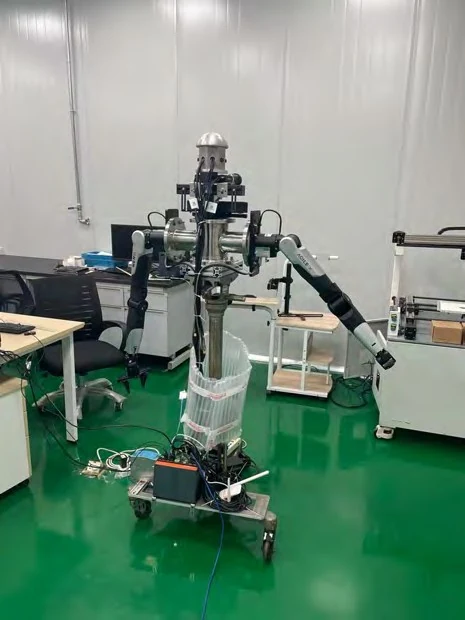
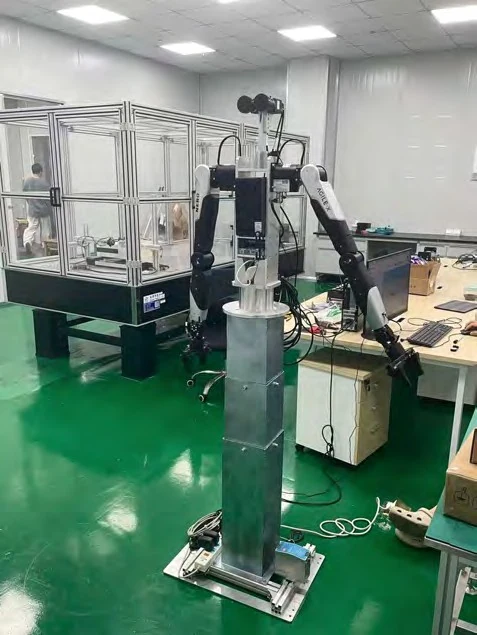
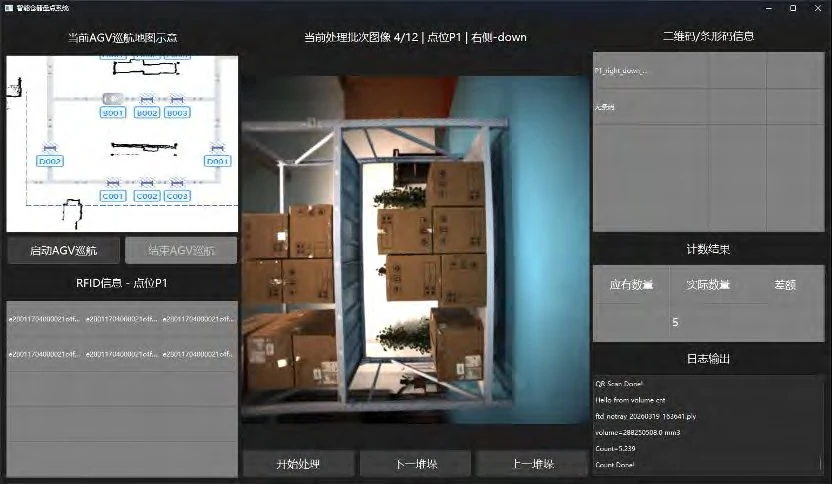
A vertical sensing module extends the mobile base from floor-level navigation to elevated storage inspection. The system combines visual, depth and identification-based sensing to capture inventory data across stacked warehouse environments.
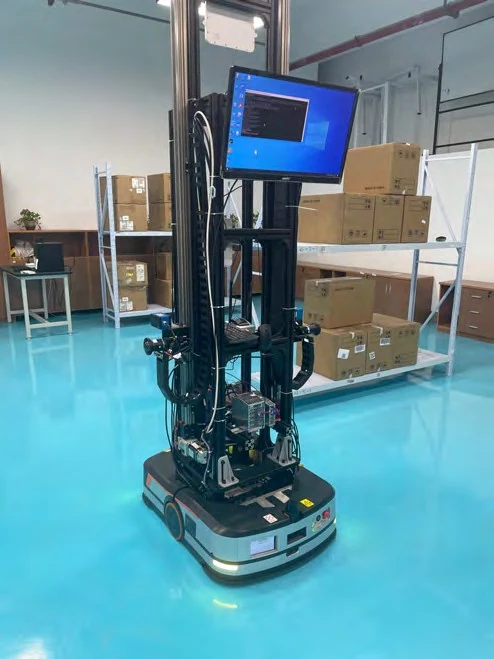
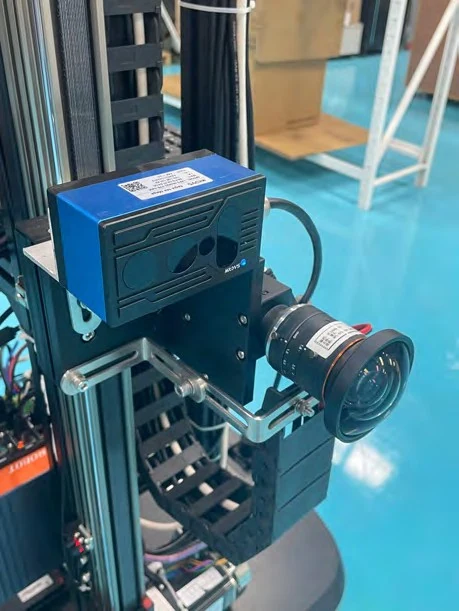
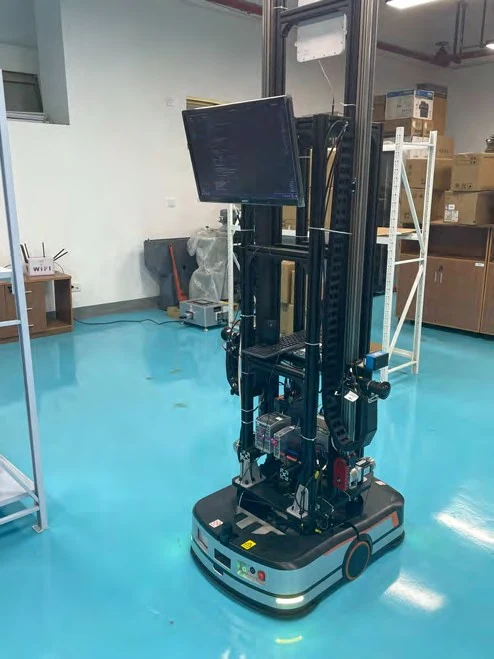
SENSE. ALIGN. COUNT.
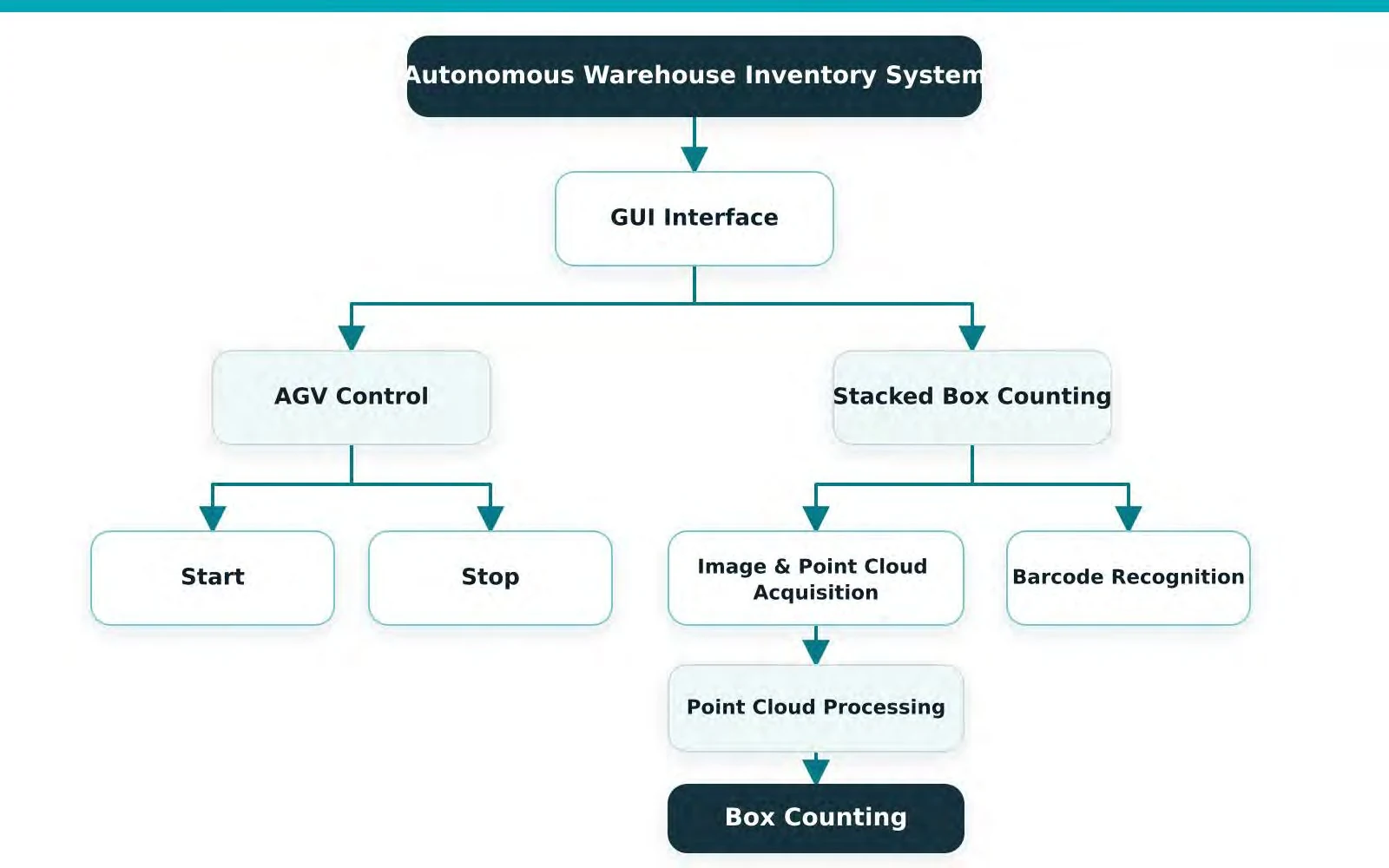
The interaction layer connects AGV control with stacked-box counting. RGB and depth acquisition produces point clouds for spatial processing, while RFID and barcode recognition add item-level identification.
Acquire
Capture synchronized RGB, depth and identification data.
Interpret
Preprocess point clouds and filter spatial information.
Identify
Recognize stacked boxes, barcodes and inventory location.
Validate
Test sensor placement and system behaviour on the physical robot.
Outcome
A wheeled humanoid robot progressed from exposed mechanical prototype to an integrated form, while an autonomous inventory platform combined RGB, depth and RFID sensing with point-cloud processing and stacked-box counting.
Across both platforms, product design became a systems discipline: making sensors accessible, structures serviceable and technical behaviour legible enough to evaluate in the real world.
MORPH
Digital Persona / AI-assisted Persona Design / Social Behaviour
↗